
Types of candles include tapers, pillars, votives, tealights, jars, floating candles, sculptural candles, and birthday candles. Choose the shape and holder for your setting, then compare wax, scent, and wick options; use flameless LEDs where an open flame would be unsuitable.
| Candle type | Shape or format | What it needs | Good for |
|---|---|---|---|
| Taper | Long and slender | A secure, correctly sized candlestick | Dinner tables and ceremonies |
| Pillar | A thick, freestanding column | A heat-resistant candle plate or holder | Centerpieces and decorative displays |
| Votive | A small, short candle | A fitted votive holder to contain melted wax | Small pools of light and prayer settings |
| Tealight | A shallow disc in its own cup | A suitable heat-resistant holder or base | Accent lighting and compatible lanterns |
| Container or jar | Wax poured into a vessel | Its original vessel on a heat-resistant surface | Home fragrance and gifts |
| Floating | A low, buoyant shape | A suitable water-filled, heat-resistant vessel | Supervised event centerpieces |
| Sculptural | A sphere, flower, figure, or geometric form | A wide candle plate and product-specific instructions | Decorative accents |
| Birthday | Small sticks, numbers, or letters | A cake-use design and secure placement | Brief, supervised celebrations |
| Flameless LED | An electronic candle lookalike | Batteries or its specified power supply | Sleeping areas and venues that prohibit flames |
A lavender soy jar candle tells you three things: its shape, its wax, and its fragrance. One product can belong to several candle categories. Start with where you’ll put it, then decide how you want it to look and smell.
Types of Candles With Names: Shapes and Holders
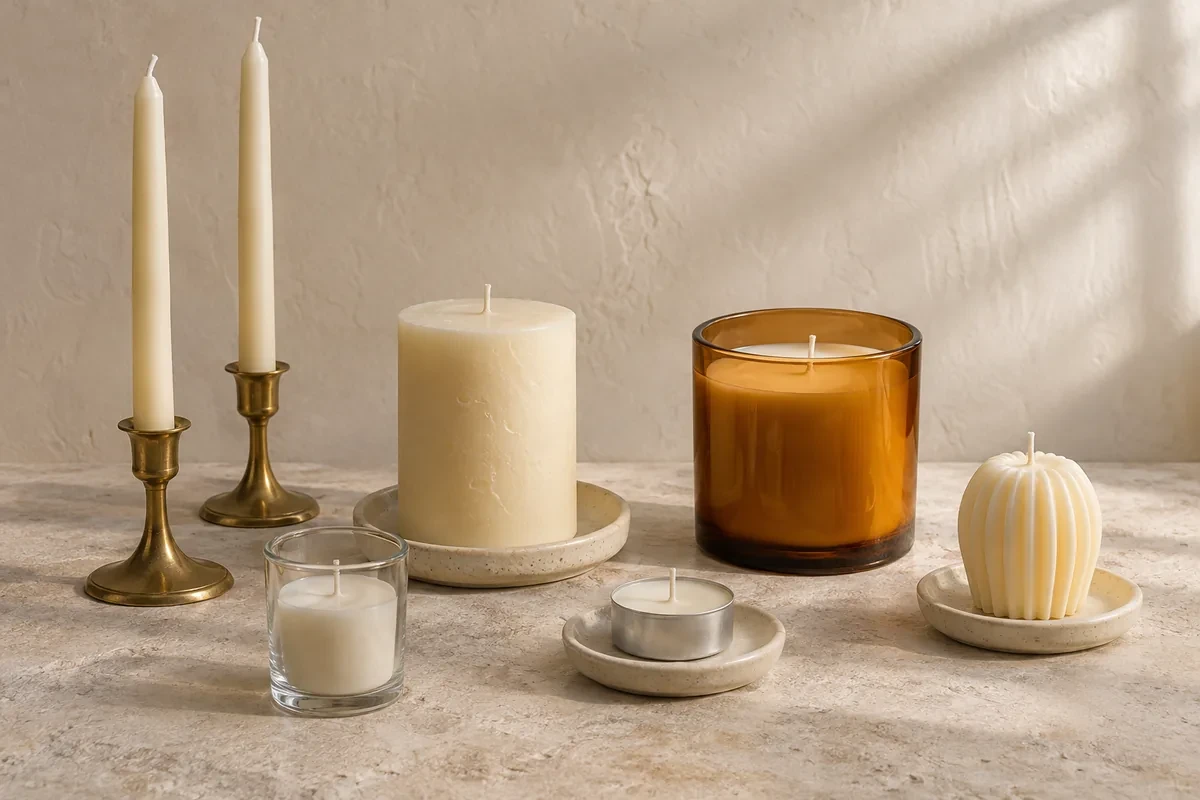
The shape tells you how a candle stands and where the melted wax goes. A taper needs a candlestick, a pillar needs a plate to catch drips, and a votive needs a container around its melt pool.
1. Taper candles: height for a dinner table
Tapers are slender candles that stand upright in candlesticks. On a dining table, they add height while leaving room for plates and serving dishes.
You’ll find smooth, twisted, ribbed, and colored versions. “Dinner candle” often describes the same basic format.
Measure the base diameter before buying. If a taper wobbles in your holder, it doesn’t fit. I’d choose unscented tapers for meals so the fragrance doesn’t compete with the food.
2. Pillar candles: a substantial decorative shape
Pillar candles are thick candles that can stand without a socket-style holder. They still need a heat-resistant candle plate or suitable holder to protect the surface beneath them and collect drips.
Cylinders are common, though you’ll also find square and ribbed pillars. Their solid shape suits centerpieces and spacious sideboards.
Choose a plate wider than the candle so it can catch wax runoff, and keep decorations clear of the flame. A pillar can stand on its own, but it still needs a safe base.
3. Votive candles: small candles that need a cup
Votives are small candles that burn inside fitted holders. As the wax liquefies, the holder keeps it contained. A bare votive on a plate can spill its melt pool.
Use votives for low table lighting or ceremonial settings. Each needs its own holder, and their low profile leaves a clear view across the table.
If you don’t have a holder, buy one with the candle. Check the dimensions against the maker’s recommendations.
4. Tealight candles: compact light in a shallow cup
Tealights are shallow candles in small cups, usually metal or a heat-resistant plastic specified for the product. They fit tealight holders and lanterns designed for their size.
Keep a tealight in its original cup. It holds the liquid wax, and the underside can still get hot.
Use a tealight in warming equipment only if the appliance instructions allow it. Stacked pots and tightly enclosed ornaments can trap heat.
5. Container candles: a convenient choice for fragrance
Container candles burn in the vessels they were poured into. For scented candles, you’ll often see glass jars, metal tins, and suitable ceramic containers.
A jar candle is a straightforward choice for a living room where you can keep an eye on it. Set it on a stable, heat-resistant surface; it doesn’t need a separate candlestick.
Inspect the vessel for damage before use. Don’t burn a cracked jar, and don’t assume an ordinary drinking glass is suitable for making a replacement candle.
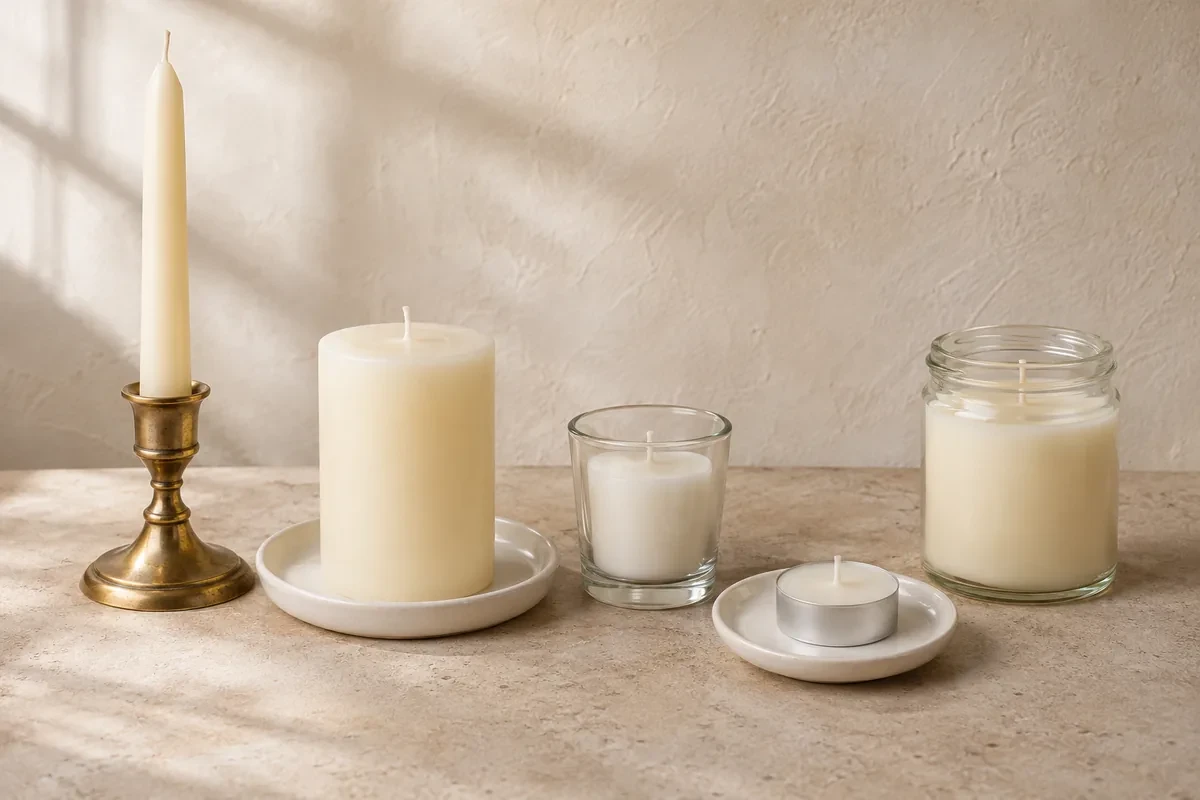
For a business collection, Iscent’s candle design options provide a starting point for choosing a vessel and presentation. The pictured designs are references; available components and specifications are confirmed for your order.
6. Floating candles: centerpieces designed for water
Floating candles have a low profile designed to stay stable on water while burning. They suit water-filled centerpiece vessels.
Buy candles made for floating. A tealight cup that happens to stay afloat hasn’t necessarily been designed or tested to burn that way.
Keep floating flowers, paper decorations, and other combustible items away from the flame. Water beneath a candle doesn’t protect objects above it.
7. Sculptural candles: shapes chosen for display
Sculptural candles come in shapes such as spheres, twisted columns, flowers, animals, and geometric forms. Some are sold mainly for decoration, so check before lighting one.
Follow the burning instructions and use a wide catching plate. As an irregular shape melts, wax can spread beyond its original footprint.
Avoid designs with combustible decorations near the wick. The Watertown Fire Department’s candle guidance specifically advises avoiding candles with embedded items.
Types of Candles: Wax Options Compared
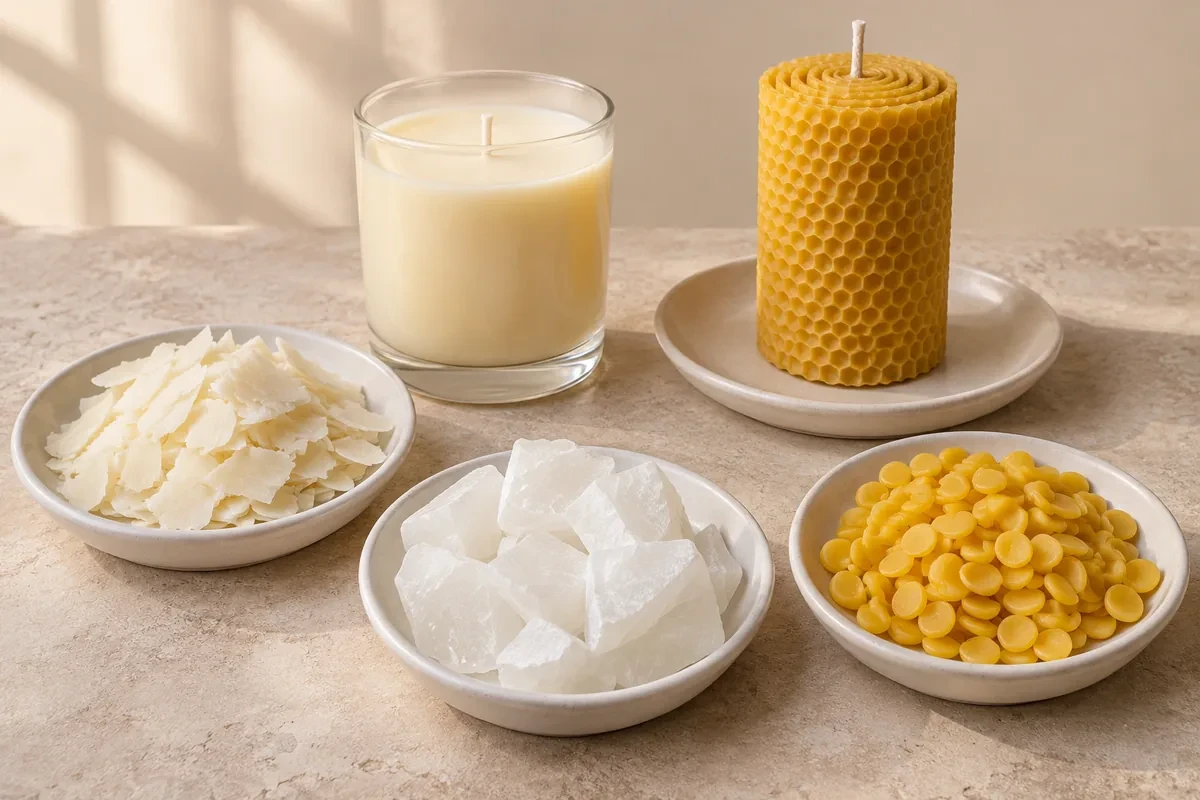
Candle wax affects structure, appearance, fragrance performance, and how the product burns. Common options include paraffin, soy, beeswax, coconut blends, and palm wax; gel candles use a different, gelled fuel system.
Check the formula’s intended use as well as its ingredient name. In its wax guide, supplier CandleScience separates container waxes from formulas for pillars and other molded candles.
Paraffin wax
Paraffin is a petroleum-derived wax used in both scented and unscented candles. It is widely available, and manufacturers use different formulations for jars, pillars, tapers, and other shapes.
Paraffin is worth considering if you want strong color or a broad fragrance selection. CandleScience lists color and fragrance retention among the reasons makers use it.
Judge the finished candle by its construction, instructions, and wick behavior. The wax name alone can’t tell you how it will burn.
Soy wax
Soy wax is made from processed soybean oil and is common in container candles. Formulas designed for pillars and wax melts also exist, so the intended use should appear in the product information.
Soy wax can develop a pale crystalline finish called frosting. You can’t judge burn quality from that finish alone.
Check whether the label says 100% soy wax or soy blend. A blend may contain another plant wax or paraffin, depending on the formula.
Beeswax
Beeswax is produced by honeybees and can be molded, dipped, or rolled into candles. Yellow beeswax may retain a subtle honey-like aroma; filtered white beeswax has a different appearance.
Choose beeswax if you like the wax’s own color, texture, or mild scent. Read the ingredients if you want to avoid added fragrance.
Be skeptical of claims that beeswax candles purify indoor air. Beeswax still produces emissions when it burns; its natural origin doesn’t prove an air-cleaning benefit.
Coconut wax and coconut blends
Coconut-based waxes are frequently sold in blends with soy, paraffin, or other waxes. Makers use those combinations to adjust properties such as firmness, appearance, and fragrance performance.
A “coconut candle” may contain other waxes. If that matters to you, read the full description or ask the maker what’s in the blend.
Palm wax
Palm wax comes from palm oil and can produce a distinctive crystalline surface. It appears in decorative candles and formulations designed to hold a molded shape.
If sourcing matters to you, look for details you can check, including any certification claims. A plant-based ingredient alone says little about the environmental impact of the finished candle.
Gel candles
Gel candles commonly use mineral oil held in a polymer gel, creating a transparent appearance. They are often sold in containers where the clear fuel becomes part of the design.
Choose a finished gel candle with clear burning instructions. Its transparent appearance doesn’t make an improvised container or decoration safe. Avoid flammable objects embedded near the flame.
Which candle wax is best?
The best wax is one that suits the candle’s job and complete formula. In a container candle, the wax, fragrance load, wick, and vessel must be compatible.
Claims such as “soot-free,” “non-toxic,” or “always burns twice as long” need evidence for the finished product, with the testing conditions explained.
A laboratory study of five pillar-candle types found that wax and wick composition affected emissions under unstable airflow. The findings give you a reason to pay attention to design and drafts, but they don’t rank the health effects of every wax sold in shops.
Types of Candles: Scents and Fragrance Strength
Common candle scent families include floral, citrus, woody, fresh, fruity, and gourmand. Pick a scent you enjoy at a strength that suits the room. If you mainly want light, choose unscented.
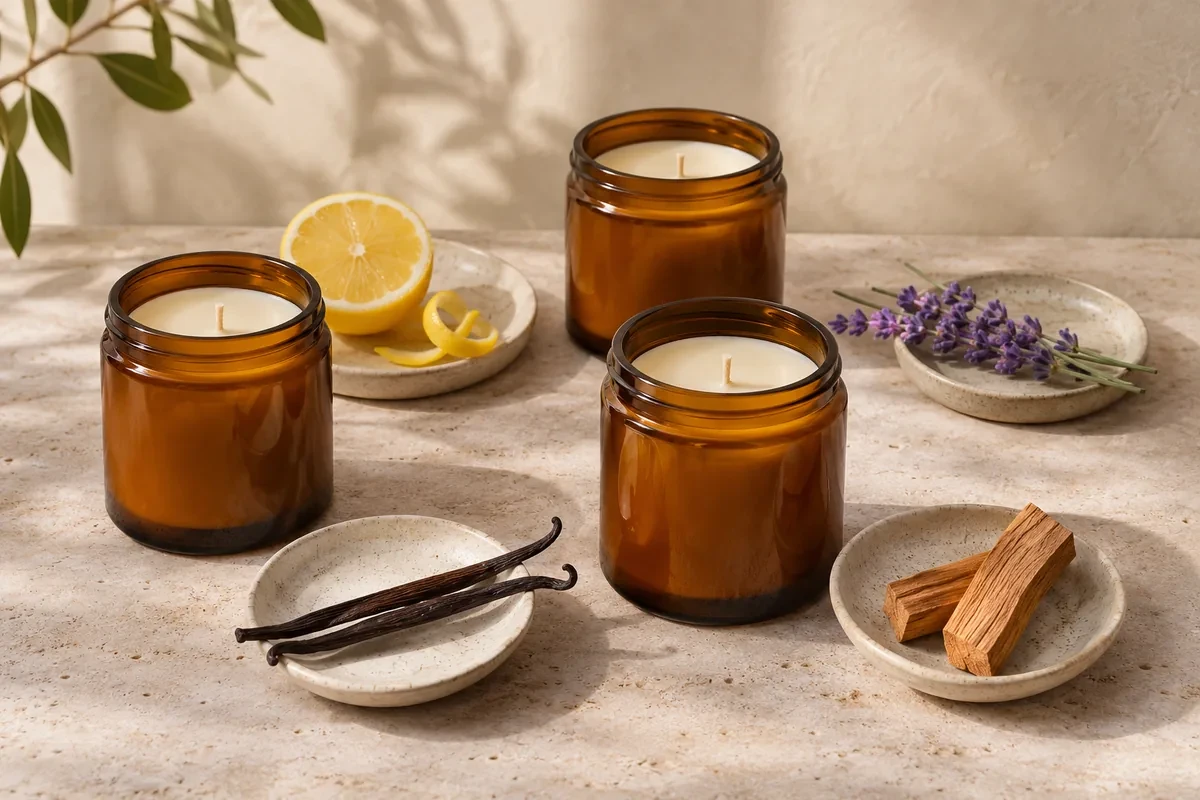
- Floral scents include rose, jasmine, peony, and lavender. Buy a smaller candle first if you’re unsure how the blend will smell when warm.
- Citrus scents, such as lemon, orange, bergamot, and grapefruit, suit people who like bright-smelling fragrances.
- Woody blends use notes such as cedarwood, sandalwood, and pine for a wood or forest-inspired scent.
- Fresh and herbal blends include linen, green tea, mint, and other herb notes. The word “fresh” describes the smell; it doesn’t mean the candle cleans the air.
- Fruity scents range from apple and pear to berries and tropical fruit. Some smell tart, while others lean toward candy.
- Gourmand and spicy blends suggest vanilla, coffee, cinnamon, or baked goods. Save these for a setting where they won’t compete with food aromas.
Cold throw is the scent you notice before lighting a candle. Hot throw is the scent released while it burns.
A candle that smells strong in a shop may seem different at home. Room size and ventilation affect the scent you notice, as do the wax formula and how the candle burns.
For a gift, I’d ask which scents the recipient likes. If you can’t find out, an unscented decorative candle avoids a fragrance they may dislike.
A candle labeled “aromatherapy” may be pleasant during a relaxing routine. The label doesn’t establish that it treats anxiety, insomnia, or another condition. If fragrance bothers you, stop using it and consider an unscented LED candle.
For a branded scent, Iscent’s custom candle options cover fragrance direction alongside the vessel, wax, wick, labels, and packaging. Review the proposed scent in the finished candle sample.
Develop a scent for your brand
Share your fragrance direction, preferred vessel, and quantity per scent with Iscent. Orders start at 1,000 candles; we’ll confirm the proposed mix and sampling scope with you.
Wick Types: Cotton, Wood, and Multiple Wicks
Cotton and wooden wicks carry melted fuel toward the flame, while multiple-wick designs distribute burning across a wider candle. The wick must suit the wax formula and candle dimensions.
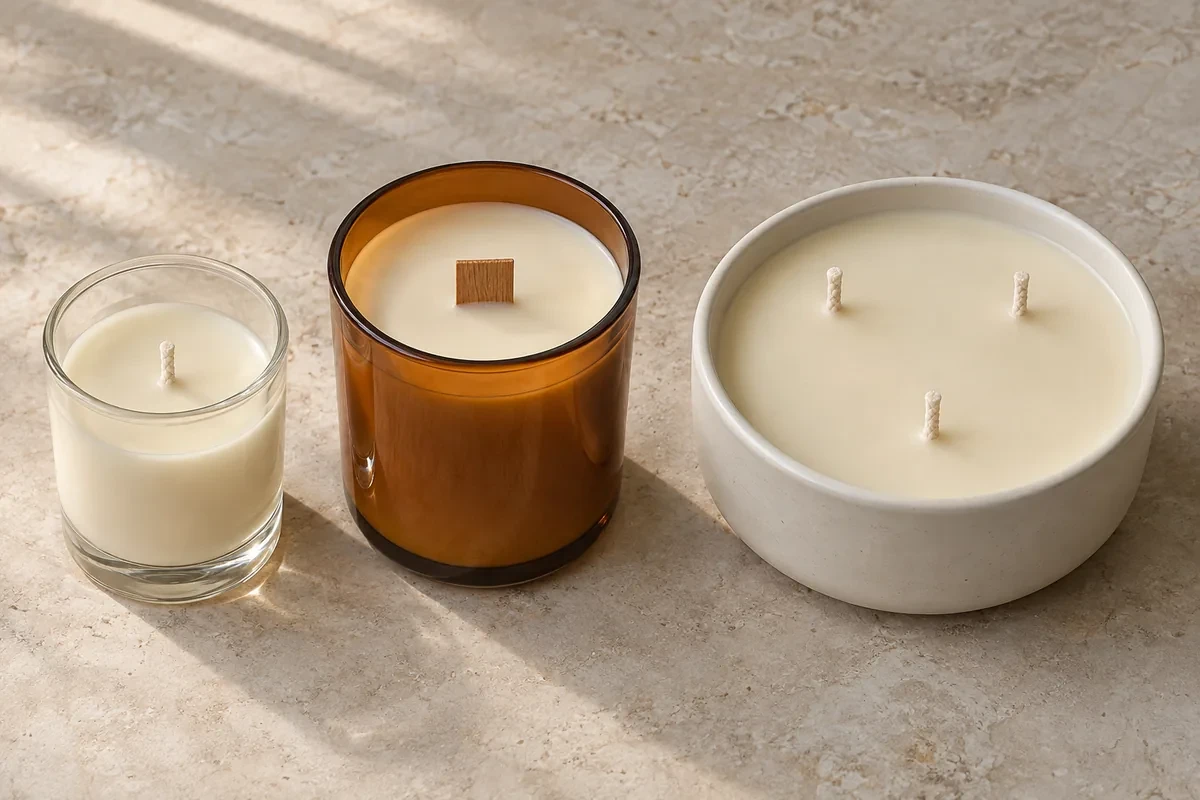
Cotton wicks are common across many formats. Wooden wicks can add a crackling sound, although the sound and performance vary by product.
A three-wick jar can spread the melt pool across a wider surface. Those extra wicks also change how quickly the fuel is used, so don’t assume three wicks will last longer than one.
Follow the manufacturer’s instructions for lighting and trimming every wick. A wooden wick may require a different trim length from a cotton wick. If a flame becomes unusually high, smokes repeatedly, or behaves erratically, extinguish the candle and let it cool before checking it.
Types of Candles and Their Uses
Choose a candle for the place you’ll use it and how closely you can supervise it. Unscented tapers or votives suit dinner tables, a jar can scent a living room, and sleeping areas call for flameless lighting. Consider children, pets, and anyone else nearby.
Dinner parties and wedding tables
Unscented tapers, votives, and tealights provide table lighting without adding fragrance to the meal. Choose the format that fits your holders and leaves adequate clearance around every flame.
For a wedding, check the venue’s rules before ordering. Some venues prohibit open flames or require approved enclosures.
On a reception table crowded with menus, greenery, and place cards, LED votives can save you from rearranging the whole display to make room around live flames.
Living rooms and decorative displays
A scented jar candle works in a living room where someone can watch it. Pillars and sculptural candles also look good unlit. Keep any burning candle on a clear surface within view.
Keep it away from curtains, shelves above the flame, and routes used by children or pets. If the only available spot is cramped, choose an LED version.
Outdoor gatherings and citronella candles
Citronella candles are outdoor fragrance products often sold for insect deterrence. Follow the label and use other measures to protect yourself from mosquito bites.
For bite prevention, the CDC recommends EPA-registered insect repellents, protective clothing, and mosquito control around the home. A patio candle doesn’t replace those measures.
Check the candle’s outdoor-use instructions and weather limits. Avoid burning in gusty conditions that destabilize the flame.
Bedrooms, bathrooms, and power outages
Battery-operated LED candles are the practical choice for candle-style lighting in sleeping areas and bathrooms. The U.S. Fire Administration advises against lit candles in those spaces and recommends flashlights during power outages.
LEDs also suit venues that ban flames and homes where pets could reach a candle. Check that battery compartments close securely, and keep spare batteries away from children.
Types of Candles for Birthday Cakes
The main birthday-candle choices are slim sticks, numeral candles, letter candles, and themed cake candles. Choose products explicitly intended for cake use, then match their size and support to the cake.
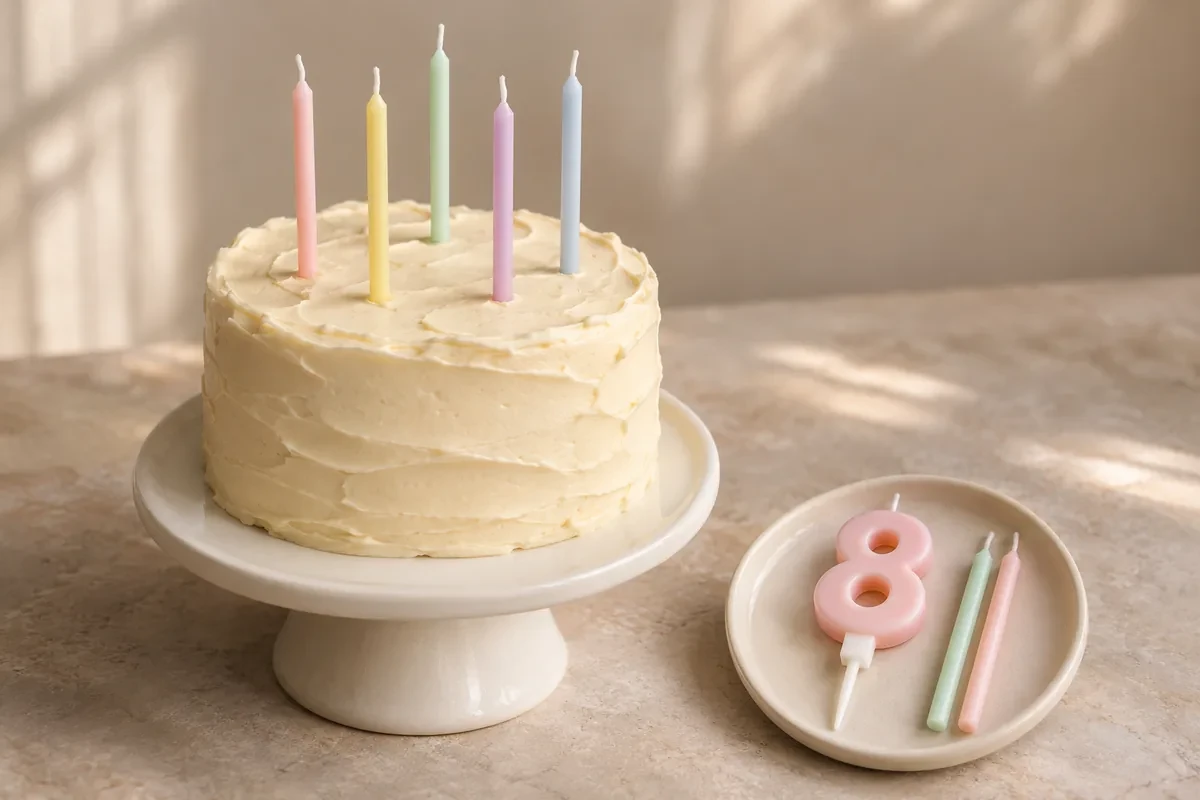
- Slim birthday candles suit a traditional arrangement or a smaller cake.
- Numeral candles show an age or anniversary with fewer candles to position.
- Letter candles spell out a short message if there’s room on the cake.
- Themed candles match the party design. Give wider or heavier shapes a secure base.
Light them shortly before the birthday moment. Keep hair, sleeves, paper toppers, and other decorations clear, then remove the extinguished candles and holders before serving.
Trick candles deliberately relight, which complicates extinguishing them. Ordinary candles are a simpler choice, especially around young children.
Sparkler-style cake products require separate care. Some are pyrotechnic items with specific restrictions; don’t assume they can be used indoors or handled like ordinary wax candles. Follow the product label, local rules, and venue policy.
Choose a Candle in Five Steps
Start with where and why you’ll use the candle. Then check the holder, fragrance, care instructions, and total cost before buying.
- Name the setting. Decide whether it’s for dinner, home fragrance, an event, a birthday cake, or an unlit display.
- Check the support. Measure the candlestick socket, votive holder, lantern, or plate before purchasing.
- Decide on scent. Choose unscented for meals and fragrance-sensitive settings. For scented candles, start with a fragrance family you already enjoy.
- Read the care label. Check maximum session length, wick instructions, required clearance, and the point at which you must stop using the candle.
- Compare usable value. Include holder costs and the maker’s stated burn-time range. Treat that range as a product estimate, not a guarantee for every room and burning routine.
For a hypothetical comparison, a $24 candle advertised for 40 hours costs $0.60 per advertised hour. A $15 candle advertised for 20 hours costs $0.75.
Use that calculation to compare prices, while remembering that it says nothing about fragrance quality or whether the candle will reach the advertised burn time. Stop at the label’s limit even if you haven’t reached the claimed hours.
If you’re sourcing candles for your own brand, private label candles can start with an available format, then add your fragrance direction, labels, and packaging. Confirm the options and sampling scope before placing a bulk order.
Get pricing for your candle collection
Send Iscent your preferred style and quantities, plus the destination, packaging needs, and delivery date. A reference image is welcome if you’re still deciding on the design.
Candle Safety and Care That Apply Across Types
Use stable supports, keep flames away from combustible items, and extinguish candles whenever you leave the room. The U.S. Fire Administration specifies at least 12 inches of clearance from anything that burns.
The Watertown Fire Department’s guidance also recommends trimming conventional wicks to a quarter inch and stopping container candles before the final half inch of wax melts. Follow any more restrictive product instructions, including wick-specific directions.
Before and during each burn:
- Remove packaging and loose wick debris before lighting.
- Keep candles away from drafts, fans, children, and pets.
- Keep the burning area clear of dried flowers, paper, and other decorations.
- Stay within the manufacturer’s maximum burn session.
- Let the candle and vessel cool before moving or handling them.
- Use the specified stopping point; never try to consume every trace of wax.
For container candles, following the first-burn instructions can help reduce tunneling: a narrow melt pool with wax left around it. There’s no reason to exceed the maker’s burn limit just to make the pool reach the edge.
If the candle smokes, the vessel appears damaged, or the flame looks abnormal, extinguish it. Don’t extend a burn beyond the label’s limit to fix an uneven surface.
Frequently Asked Questions
Candle names often overlap: a soy candle can also be a scented jar candle with a wooden wick. Shape, wax, fragrance, and wick each tell you something different about the product.
What is the difference between a votive and a tealight?
A votive usually needs a separate fitted holder to contain its melted wax. A tealight arrives in a shallow cup that stays with the candle during use; it still needs a suitable heat-resistant support.
Which type of candle burns the longest?
The wax name alone won’t tell you which candle lasts longest. Duration also depends on the amount of wax, the formula, wick number and size, candle dimensions, and burning conditions. Compare specific products used under similar conditions.
Are wax melts a type of candle?
Wax melts are wickless fragrance products heated in a compatible warmer. They belong to the broader home-fragrance category, but they don’t function as ordinary wicked candles. Electric warmers still require care around hot wax and surfaces.
Pick the Candle That Fits Your Setting
Choose tapers with secure holders for a dinner table, jars for home fragrance you can supervise, and cake candles for birthdays. Use LEDs where an open flame won’t suit the space.
Before you buy, read the wax description and care label, check the holder, and decide whether you want fragrance. Those details will help you narrow down the different types of candles.