
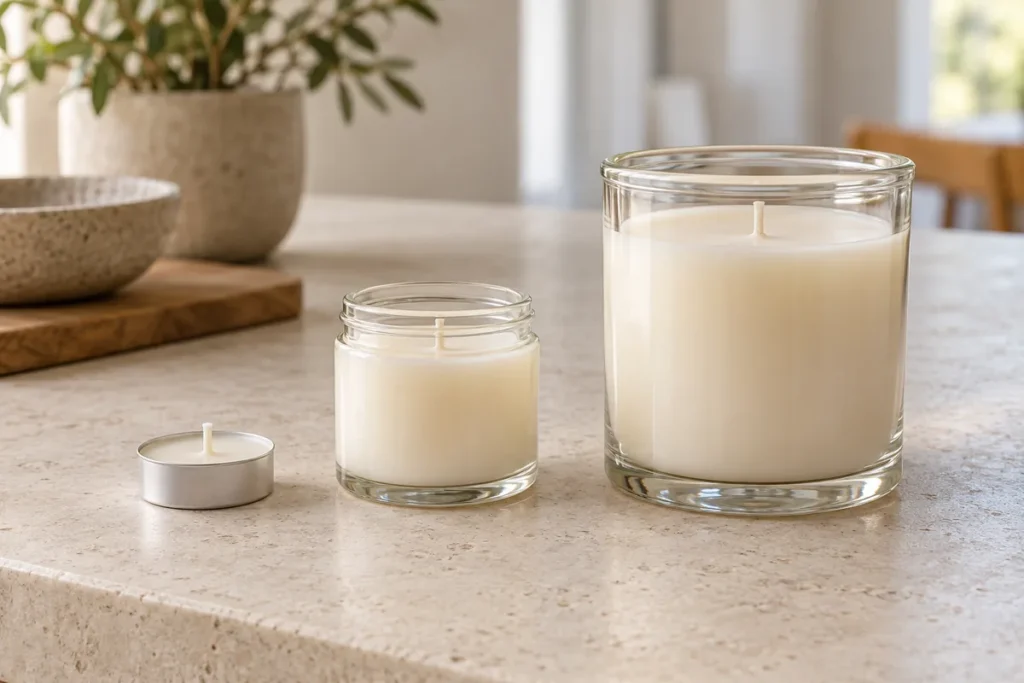
The candle lasting ranges from 4 to 6 hours for a tea light to 110 to 150 hours for a large jar, while many scented candles are best enjoyed within one to two years of purchase.
| Candle or use | Expected duration | What the figure means |
|---|---|---|
| Yankee Candle Unscented Tea Light | 4 to 6 hours | Total burn time for this product |
| Yankee Candle Original Small Jar | 20 to 30 hours | Total burn time across separate sessions |
| Yankee Candle Signature Large Tumbler | 60 to 100 hours | Published duration for this candle format |
| Yankee Candle Original Large Jar | 110 to 150 hours | Total burn time across separate sessions |
| Unopened scented candle | Often best enjoyed within 1 to 2 years | General quality guidance; follow the maker’s advice |
| Jar candle on a compatible warmer | No universal fragrance-hour rating | Wax remains while fragrance gradually weakens |
Check your candle’s label before relying on a figure in the table. These are estimates for specific products, and a change in wax, wick, or container can change the result.
A 100-hour candle still needs separate, supervised burns. That rating tells you its total expected life, not how long you can leave it lit in one sitting.
What Determines a Candle’s Burn Time?
Wax quantity, wick design, container shape, and burning conditions all affect lifespan. Two jars can look almost identical and give you very different numbers of burning hours.
The wax is the fuel. The wick draws melted wax toward the flame, where the wax vapor burns. Some wax should remain at the bottom when you stop using the candle, as directed by its safety label.
Wax weight gives you a starting point
More usable wax can provide more burning hours when the rest of the design is comparable. Look for the net wax weight on the label; a heavy glass jar adds no fuel.
An 8-ounce candle and a 16-ounce candle may seem easy to compare. Extra wicks, a wider opening, or a different formula can keep the larger candle from lasting twice as long. I’d compare their published burn ranges before choosing.
If you’re planning a collection, the glass jar and candle vessel options at Iscent give you a starting point for discussing dimensions and fill weight. Confirm those specifications before comparing expected burn times.
Wick count and size change fuel consumption
More flames generally consume wax faster in otherwise comparable candles. A wide three-wick candle can finish sooner than a narrower single-wick candle, even when it holds more wax.
Those extra wicks help heat a wider surface. Light and maintain them as the maker directs; lighting only one wick in a multi-wick candle can leave an uneven melt pool.
Wax type is part of the formula
Soy, paraffin, beeswax, coconut blends, and other formulas have different burning characteristics. Fragrance load, wick choice, and the rest of the design also affect the finished candle.
A soy label alone won’t tell you how many extra hours a candle will last. There is no dependable percentage that applies to every soy-versus-paraffin comparison.
For a custom collection, consider the wax, wick, fragrance, and vessel together. Iscent’s customization guidance treats these as parts of the same candle and calls for verification of any burn-time claim.
How Long Does a Candle Last in a Jar?
A jar candle can last a few dozen hours or well over 100 hours. Yankee Candle, for example, lists 20 to 30 hours for its Original Small Jar and 110 to 150 hours for its Original Large Jar in its duration guide.
Suppose yours is rated for 60 hours and you light it for three hours each evening. You’d get about 20 evenings, provided a three-hour session fits the care instructions.
Estimated sessions = total rated burn hours ÷ hours per session.
At four evenings a week, those 20 sessions cover about five weeks. Treat that as a planning estimate: drafts, wick care, and the candle’s performance at home can change it.
You can use the same numbers to compare prices. A hypothetical $30 candle rated for 60 hours costs $0.50 per rated hour. A $20 candle rated for 25 hours costs $0.80 per rated hour.
I’d still consider the scent and the room where you’ll use it. A candle can be good value per hour and a poor choice for your home.
How Long Do Scented Candles Last Unopened?
Plan to enjoy many scented candles within one to two years of purchase for their best quality, unless the maker gives a different window. That’s Archipelago’s general guidance, rather than a fixed expiration date for every candle.
An unopened box isn’t necessarily airtight. Fragrance can escape or change over time, while heat and light can affect the wax’s appearance and performance.
An older candle may still be usable. Check its container and wick, read the care label, and assess its condition before lighting it.
You’ll often see two terms when comparing scent:
- Cold throw is the fragrance you notice while the candle is unlit.
- Hot throw is the fragrance it releases while burning or warming.
A weak cold throw doesn’t reliably predict the scent during use. A quick sniff alone isn’t enough to decide that a candle has expired.
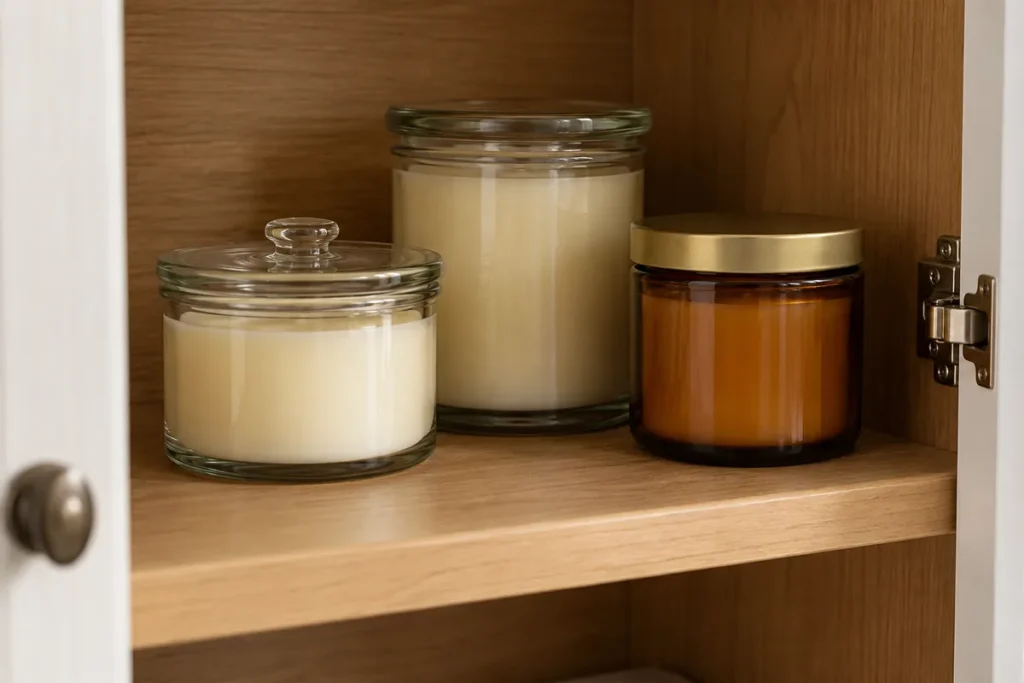
Store candles in a cool, dry cupboard, away from sunlight and heaters. Put the lid on once the candle has fully cooled, keep its care label, and note the purchase date if you tend to collect more candles than you burn.
Unscented candles can remain useful for years in suitable conditions. Check them for damage before use, too.
How Long Does a Candle Last in the Fridge?
Refrigeration has no established general lifespan benefit that you can count in extra burn hours or years of fragrance. For most finished candles, a cool cupboard with a steady temperature is the more practical storage choice.
Follow any specific storage instructions from the maker. Cold storage can introduce moisture: the National Candle Association’s science-project guidance cautions that refrigerated candles need protection because a damp wick changes how they burn.
Already put yours in the fridge? Let it return to room temperature and dry completely before considering use. Check the container and wax, then follow the product’s directions.
Never put a burning candle in a refrigerator or use a fridge or freezer to cool a hot jar quickly. Avoiding those temperature swings also makes everyday storage simpler.
How Long Does Candle Scent Last After Burning?
The scent may fade within minutes or remain noticeable for hours after the flame is out. The fragrance, room, airflow, and your own sense of smell all affect how long you notice it.
That’s a rough expectation. A candle’s burn-time rating doesn’t promise a certain number of hours of lingering scent.
A candle that scents a small study may seem faint in an open-plan living room. Open windows and doors disperse fragrance, and different scent ingredients behave differently in the air. Your nose can also become less sensitive to a smell after you’ve been around it for a while.
If the scent seems to vanish, leave the room briefly and see what you notice when you return. That can help you judge your perception, though it won’t measure how much fragrance remains in the wax.
Don’t extend a burn beyond the label’s limit to chase a stronger smell. Choose a candle suited to the space, keep normal ventilation, and stop if the fragrance becomes uncomfortable.
How Long Does a Candle Last with a Candle Warmer?
A compatible warmer releases fragrance without burning the wax as fuel, so the wax can remain after the scent has weakened. The candle’s printed burn-time rating won’t tell you how many useful hours you’ll get on a warmer.
Candle Warmers Etc. explains that repeated heating gradually depletes the fragrance. A jar that still looks nearly full may already smell much weaker.
Lamp warmers heat from above; plate warmers heat from below. The candle’s size, the heat setting, and how much wax is being warmed all affect fragrance release.
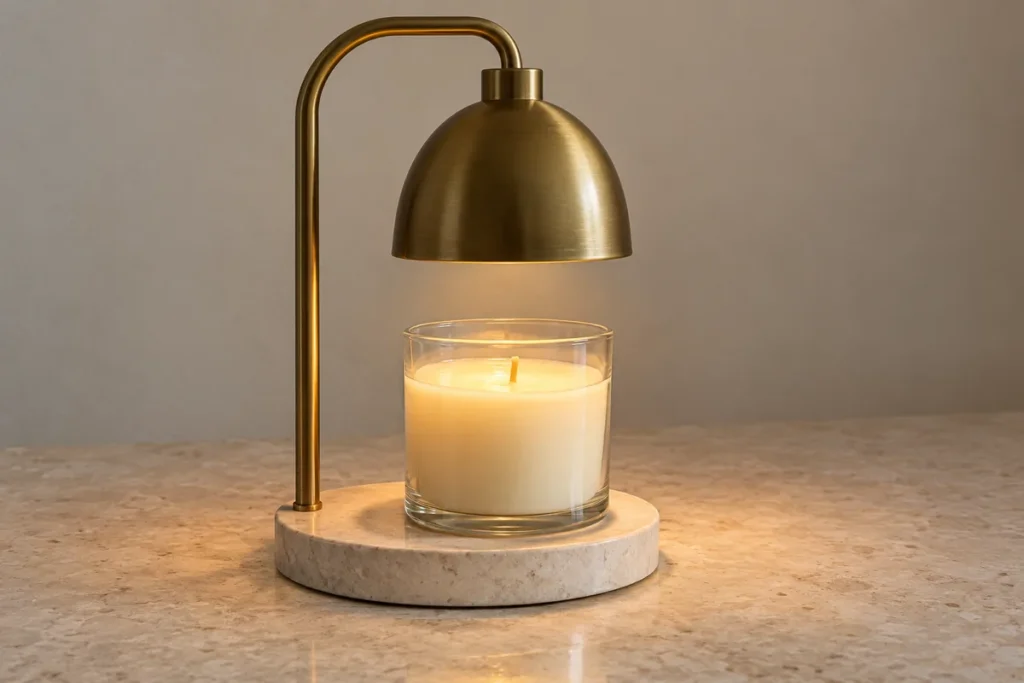
I’d be wary of a promise that every candle lasts “twice as long” or “five times longer” on a warmer. To judge that claim, you’d need to know which candle and device were used, the heat setting, and when the tester decided the scent was too weak.
You can get a useful estimate for your own setup with a simple log:
- Note the candle, warmer, and heat setting.
- Record each supervised warming session’s length.
- Judge the fragrance in roughly the same room conditions.
- Add up the hours when the scent becomes too faint for your preference.
The result applies to that setup and your preferences. Another candle or heat setting may give a different result.
Check that the candle and its container suit the device. Never light the wick while using the warmer, and follow its time limits and instructions for removing depleted wax. Both the glass and melted wax can burn you.
How Long Does a Candle Last in Trading?
On a time-based trading chart, each candle covers the selected interval. A five-minute candle usually covers five minutes; a one-hour candle usually covers an hour.
Here, a candle is a price-chart symbol. TradingView’s interval guide explains that it shows the opening, high, low, and closing prices for that interval.
A daily candle covers the market’s trading day or session. Session boundaries can shorten the final intraday candle. Tick and range charts use trading activity or price movement instead of fixed periods.
How to Make Your Candle Last Longer
Following the care label, maintaining the wick, and choosing a suitable place to burn the candle help reduce soot and wasted wax. Aim for a stable flame and an even burn within the product’s limits; no maintenance trick guarantees extra hours for every candle.
1. Trim the wick before lighting
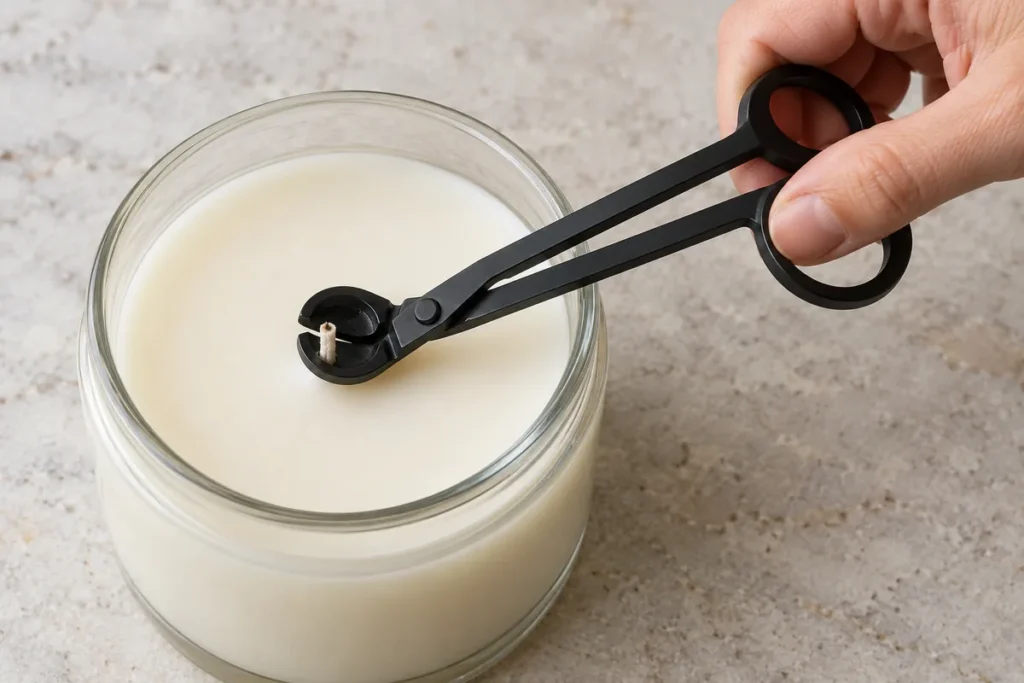
For many cotton-wick candles, the recommended length is ¼ inch, or about 6 mm. The Phillipston Fire Department’s candle safety guidance recommends a quarter-inch trim to reduce smoking, as does P.F. Candle Co.’s care guide.
Follow your candle’s own directions, especially for wooden or specialty wicks. Trim only after the flame is out and the wax has cooled, and remove the clipping from the jar.
A long wick can produce a large, smoky flame. A wick cut too short can be hard to light, so take off only what the instructions call for.
2. Follow the first-burn instructions
Give the candle the first burn its maker recommends, without exceeding the maximum session length. On many jar candles, allowing the melt pool to develop helps prevent tunneling, where the center burns down and leaves wax around the sides.
Don’t keep a candle burning indefinitely to force the wax to reach the glass. Some designs leave a temporary rim that melts during later sessions.
If a deep tunnel persists despite correct use, contact the maker. Burning past the stated limit can create a safety problem while you’re trying to save the wax.
3. Keep the flame away from drafts
A spot away from fans, vents, and open windows helps the flame stay steady. Drafts can make it lean or flicker and heat one side of the candle more than the other.
Use a stable, heat-resistant surface and clear the area before lighting. Keep curtains and other flammable materials well away.
You can ventilate the room while keeping the candle out of a direct air stream. There’s no need to seal the room to hold in the scent.
4. Respect the maximum session length
Burn for no longer than the label allows, then let the candle cool before handling or relighting it. Four hours is a common maximum, though some candles need shorter sessions.
P.F. Candle Co.’s Arroyo Oak Standard Candle, for example, has a four-hour limit. Check the directions for the candle you own.
A timer is a useful reminder to extinguish it. You still need to stay present and attentive while the flame is burning.
5. Cover and store it after it cools
Cover a fully extinguished, cooled candle to keep dust out between uses. Store it away from heat, sunlight, and moisture, and remove matches or wick clippings from the wax before the next burn.
Use the lid as the maker directs. A decorative lid may not be suitable for extinguishing the flame, and water should never be poured onto hot wax. Keep the care label readable so you can check it next time.
When Should You Stop Using a Candle?
Stop at the maker’s minimum remaining wax level, or sooner if the candle develops a problem. Leaving some wax in the jar is normal. Trying to burn every last bit can overheat the container.
Watch for:
- Cracked, chipped, or otherwise damaged glass.
- A wick that has moved close to the container wall.
- An unusually large, unstable, or persistently smoky flame.
- Debris or foreign material in the wax pool.
- Abnormal burning that continues after proper cooling and wick care.
If something looks wrong, extinguish the candle and let it cool completely before inspecting it or contacting the maker.
Faded color and weaker fragrance can signal a change in quality, but they don’t establish whether a candle is safe. Check the glass, wick, and burning behavior separately.
The U.S. Fire Administration recommends at least 12 inches of clearance between lit candles and anything that burns. It also says to extinguish candles when you leave the room or go to bed, and advises against using them in bedrooms, bathrooms, and sleeping areas.
Keep candles away from children and pets. For light while sleeping, use a battery-operated candle.
Choose a Candle Around How You’ll Use It
Use the product’s burn range, your usual session length, and its care instructions to estimate how long it will last. Once you’ve used it a few times, your own session notes can make that estimate more useful.
For a scented candle in storage, plan to enjoy it while the fragrance is at its best. With a warmer, judge the scent as well as the wax level and follow the device’s limits. When burning, stop at the safe wax level even if a little fuel remains.
If you’re developing a range for your brand, Iscent’s candle manufacturing process explains how sample review and agreed specifications fit into production. Ask for burn-time evidence for the exact configuration you approve.
Check the label and divide its rated hours by your usual session length. That’s where I’d start when asking, how long does a candle last?